

International Conference Celebrating 10 years of operation of the
Interuniversity, Interdepartmental Master’s Programme “Higher Education Policy: Theory and Praxis” (MaHep)
Contemporary university functions as an intricate and multifaceted entity, undertaking a wide range of responsibilities. This complexity arises, on the one hand, from the expansion of its missions, which now encompass lifelong learning, links with society and the labour market, and the cultivation of active citizenship (Kavasakalis A., 2024). Conversely, the university is significantly influenced by emerging opportunities in the modern environment, including technological achievements, the development of distance or hybrid study programmes (SP), and innovative research methodologies (https://education.ec.europa.eu/, accessed on 20.01.2026). In the contemporary era of lifelong learning, universities are undergoing a transformation from research institutions that primarily produce new knowledge to complex non-formal educational structures. In this context, at the national level, non-formal education structures are being developed within the university in parallel with the SPs, further changing the role and character of the university (Kavasakalis & Papadimitriou, 2022).
Throughout its extensive history, the university has undergone constant transformations, through which it has adapted to the social and historical conditions of each era while preserving its fundamental role in the formation of knowledge and the scientific community. In this context, a critical question arises: do contemporary developments constitute an additional historical phase of adaptation for the university, or do they instead mark a process of deconstruction of the institution itself? It is imperative to ascertain which elements of the erstwhile forms of the university persist, and which are undergoing radical transformation Marginson (2016).
Concurrently, a seemingly paradoxical phenomenon is evident: never before in the history of the university have so many students had access to it, while at the same time never before has there been such intense dissatisfaction. The value of a university degree appears to be subject to scrutiny with regard to its practical utility in the professional sphere and its societal prestige. This phenomenon is concomitant with more extensive social and political realignments in the role of higher education (OECD, 2025). Moreover, the internationalisation of studies is undergoing two concurrent processes: expansion and transformation (Kavasakalis & Gkiza, 2022).
In this context, proposals are sought that address the following areas of analysis of the university institution:
1.1 University transformations and institutional changes: Vision and Mission
1.2 Sustainability, Governance and Autonomy, Quality Assurance
1.3. Internationalisation and Mobility
1.4 Research (and its methodologies) and Technological Developments
1.5 European Higher Education Area
1.6 The third mission of the university.
The university was historically established as an association of academic communities, with teachers and students as its central pillars initially and, in later phases, other professional groups such as administrative staff. The basis of this collective organisation was relationships of academic cooperation, shared values and institutional solidarity. However, in the contemporary context, it appears that heightened competition and the predominance of consumerist models are profoundly altering the internal structures of the university institution, thereby transitioning the relationships between its constituents towards a service provision and consumerist dependency model.
In this environment, the work of teachers is undergoing fundamental changes, both in terms of their relationship with the institution and the content of their institutional obligations. The increase in bureaucratic workload, in combination with the management of concurrent teaching and research activities, is having a profound impact on their professional profile (Stamelos, Vasilopoulos & Kavasakalis, 2025). Parallel, the modification in the philosophy underlying the configuration of study programmes exerts a definitive influence on the perception of the learning process, assessment practices and the pedagogical role of the teacher (Gavriilidou et al., 2023).
Students are progressively transitioning from active participation in the university community to a state of passivity, whereby they become consumers of educational services. The broadening of access to higher education has resulted in a diversification of social and educational profiles, highlighting heterogeneous needs and reinforcing market behaviours. This, in combination with technological advancements, necessitates a comprehensive review of learning formats and assessment procedures (Stamelos, Vassilopoulos, Kavasakalis, & Diakhaté, 2024). The institution is being compelled to develop new support services in order to respond to a diverse range of needs.
In this context, proposals are sought that relate to the following areas of analysis of the university institution:
2.1 Social Dimension of the University (institutional dimensions)
2.2 Teaching Staff and Academic Work
2.3 The role and position of administrative staff
2.4 Students and their needs.
The university has undergone a series of extensive transformations in recent decades, with the most significant change being in the philosophy of curriculum design (Barnett, 2000; Kerr, 2001). The traditional concept of the curriculum, organised around distinct scientific areas and cognitive subjects, is gradually being replaced by a model structured on the basis of learning outcomes (European Commission, 2022). This shift signifies a fundamental readjustment of educational priorities, with the focus transitioning from the teacher’s teaching work to the learner’s learning experience and achievements, thereby reinforcing the logic of student-centred learning.
There has been a systematic endeavour to incorporate non-formal education into the formal curriculum, most notably in the form of internships. Recent developments indicate an escalation in the trend under discussion, as pressure increases to incorporate further non-formal educational activities. In this context, micro-credentials/micro-certifications are emerging as the primary mechanism, thereby redefining the boundaries and coherence of the traditional curriculum.
In this context, proposals with a focus on the development of initial training and continuing professional development programmes for teachers are of particular interest. Questions of critical import pertain to the manner in which the aforementioned changes affect the design and orientation of these programmes, the precise signification of these changes in terms of professional identity and pedagogical role, and the forms of resistance or adaptation that emerge (Beauchamp & Thomas, 2009; Sachs, 2016).
An initial teacher training programme can be understood as structured in three dimensions: a) the ‘what’ (cognitive areas), b) the ‘how’ (teaching and pedagogical approaches) and c) the ‘why’ (reasons for structuring the curriculum). The focal point of this axis is the third dimension, with an emphasis on its value, social, political and professional dimensions. Proposals are sought for the following areas of analysis of the university institution:
3.1 Student-centred learning and learning outcomes for teachers
3.2 Non-formal education activities in formal curricula for educators – Internships
3.3 International, European and national policies for promoting student-centred learning, learning outcomes and non-formal education activities in teacher training programmes.
Ιn the context of lifelong learning, it is now widely accepted that initial education alone is not sufficient to ensure a successful and sustainable career. Consequently, professional development is recognised as an integral component of an individual’s overall educational trajectory, and as a dynamic process that extends throughout their professional life. In the context of education, professional development has been identified as a pivotal element in the shaping and reflective reconstruction of teachers’ scientific and professional identity (Beijaard, & Meijer, 2004; Meijer, Verloop).
The present axis is oriented towards the exploration of the professional development of teachers in close connection with their scientific development, highlighting its relationship with the initial formation, but also the ongoing transformation, of their scientific and professional identity. This identity is not regarded as static or predetermined; rather, it is understood as the outcome of intricate processes involving learning, socialisation and professional experience, which occur within diverse institutional and social contexts (Kelchtermans, 2009).
The focal point of this discourse pertains to the critical inquiries surrounding the mechanisms and conditions that facilitate the formation of teachers’ scientific and professional identity. The following research question is proposed: how is their scientific identity formed and how does it relate to their professional identity? The question arises as to whether these two dimensions develop in parallel or asymmetrically. At which stages of their educational and professional career do they form, and under what conditions do they evolve? The exploration of these questions constitutes the fundamental objective of research in this domain, thereby facilitating a more profound comprehension of the dynamic nature of teachers’ professional learning and the conditions that shape it (Avalos, 2011).
The present axis is interested in proposals relating to the following fields that analyse the university institution:
4.1 Scientific and professional identity of teachers
4.2 Lifelong learning and continuing professional development of teachers
4.3 International and European approaches to initial teacher education and professional development

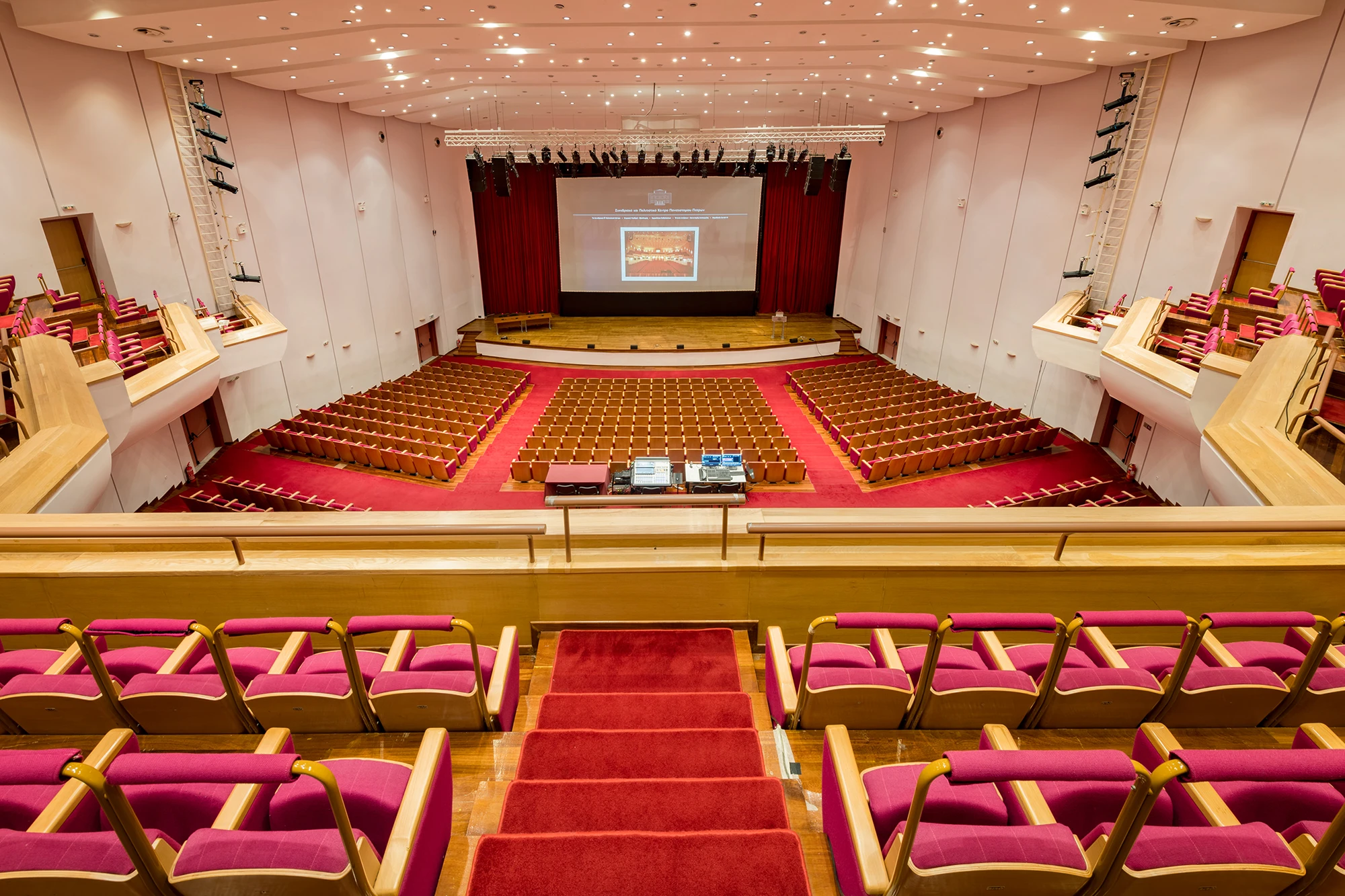
The MaHep 2026 conference will be held at the Conference and Cultural Center of the University of Patras, a modern and well-equipped venue, ideal for high-level scientific events.
The University of Patras is located on a lush green campus in the Rio area, with easy access from the center of Patras, the railway station and the highway. The location combines comfort, modern infrastructure and a welcoming environment for participants.
International Arrivals
Patras is connected by ferry to Italy (Ancona, Bari, Brindisi ports) and is a major hub to Greece from Central Europe.


